
Capture or import
Use live camera recognition, choose a gallery image, or add guided photos when confidence is low.
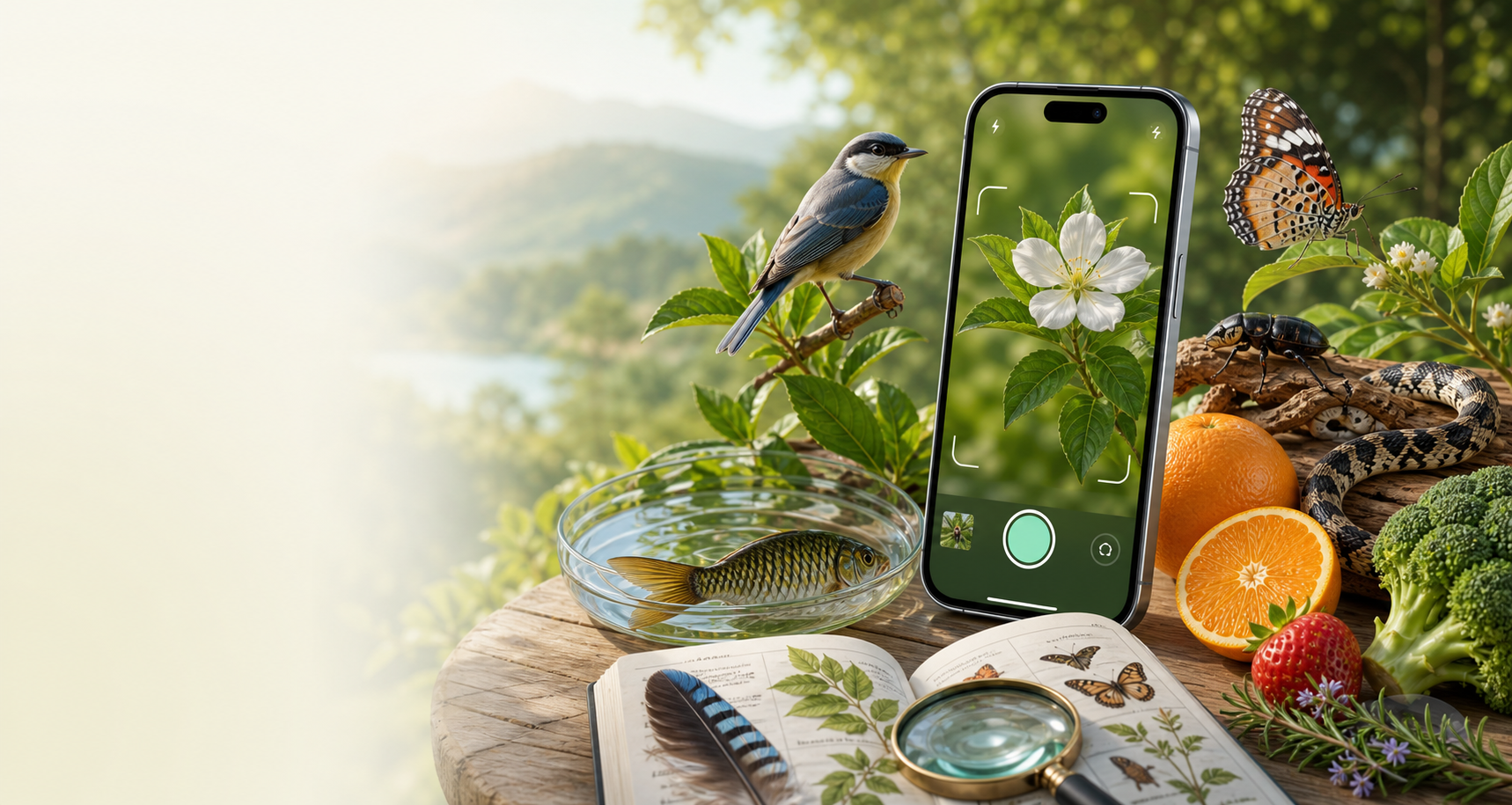
Camera-first biodiversity app
Field Guide Visual ID helps you recognize plants, birds, insects, reptiles, snakes, animals, aquatic life, fruits, and vegetables with a fast scan, local context, and saved finds.
Inspired by field observations
Like the best citizen-science tools, Field Guide starts with an observation: what you saw, where you saw it, and what season it is. The app is designed to turn that moment into a useful identification, not just a static encyclopedia entry.
Use live camera recognition, choose a gallery image, or add guided photos when confidence is low.
Provider results are blended with GPS, country, season, local packs, and nearby likelihood signals.
My Finds stores the image, location, result, confidence, and details so you can reopen it without another scan.
More than plants
Field Guide is designed for global exploration, with downloadable country packs for 195 countries and 74 language options for a broader, more local experience.
Identification, toxicity, uses, care, allergy and pollen notes, seasonal traits, and similar species.
Field marks, habitat, voice notes, migration, nesting, diet, and lookalikes near your location.
Life stage, host plants, bite or sting risk, household context, pest notes, and visual differences.
Pattern, range, activity season, safety guidance, venom risk, and similar species to avoid confusion.
Behavior, tracks, signs, range, active times, safety notes, and broad ID versus exact ID confidence.
Body shape, fins, water type, season, movement, local likelihood, and future regulation notes.
Nutrition, vitamins, culinary uses, origin, seasonality, freshness cues, and country-relevant produce.
Field intelligence
The app can use Kindwise, PlantNet, eBird, and other biodiversity sources, then explain confidence with range, season, photo quality, and visual match signals.
Priority species and produce can load from bundled or downloadable packs, so common items feel instant while long-tail results can still come from online sources.
When one image is not enough, Field Guide asks for the right next photo: leaf, flower, bark, side profile, wing, body pattern, or safe-distance context.
Results are organized by category with meaningful sections, similar images, safety notes, care or habitat, medicinal value where appropriate, nutrition for produce, and nearby observations.
Designed for real use
Field Guide is not only a plant scanner. It is a personal observation library for curious people: gardeners checking toxicity and pollen, parents identifying backyard wildlife, travelers learning regional species, and shoppers exploring fruits and vegetables from around the world.
Trust and safety
Field Guide is built to show when a result came from Kindwise, PlantNet, eBird, local data, or a fallback. It should never pretend uncertainty is certainty, especially for toxic plants, venomous snakes, edible items, or medical-style uses.